Reflections on teaching with and without medical preceptors
In Exam Essentials’ instruction model, each Sensitive Exam Teaching Associate (SETA) serves as both the instructor and the model. Typically, one SETA works with a small group of about five students.
This approach differs from the framework many institutions use. I began my work in this field at the University of New Mexico, where a CTA (Clinical Teaching Assistant) serves as the model and a medical preceptor teaches the exam and clinical content. That model shaped my early understanding of this work.*
I’ve seen preceptor-supported models work beautifully when there is shared philosophy and genuine collaboration in shaping the student experience. This alignment in thinking about patient care and how to educate can make the student experience rich and balanced in meaningful ways.
Preceptors can be especially valuable in reinforcing professional boundaries and addressing the occasional instance where a learner needs additional guidance around respectful conduct. While equipped to navigate challenging moments, instructor-models benefit from the presence of a second instructor, which can distribute attention in ways that protect both the learning environment and the experience of the model.
Preceptors can also address clinical questions that instructor-models cannot answer for liability or scope-of-practice reasons. And, practically speaking, having two people involved can make demonstrations logistically easier.
Holding all of this in view, I ultimately chose to structure Exam Essentials around a single instructor-model approach, after experiencing this method in California following my CTA work at UNM. Over time, its particular advantages became increasingly clear to me, especially in the context of sensitive exams.
Side Note: I’ve also encountered approaches in which two SETAs are trained, one focused on teaching the mechanics of the exam and the other on modeling for practice, with both addressing patient comfort and relational dynamics. These hybrid models can offer their own strengths depending on context and goals.
Centering the patient experience
In many clinical settings, exams are taught from a top-down perspective: the clinician demonstrates, the student imitates, and the patient is, understandably, positioned primarily as the focus of demonstration. This approach makes sense within medical training, but it can unintentionally shift the patient into a more passive role.
When the patient is also the instructor, the tone of the encounter changes. Students learn not only how to perform an exam, but how to navigate it collaboratively with the person in front of them. They receive real-time feedback about communication, pacing, consent, and touch, alongside technical instruction.
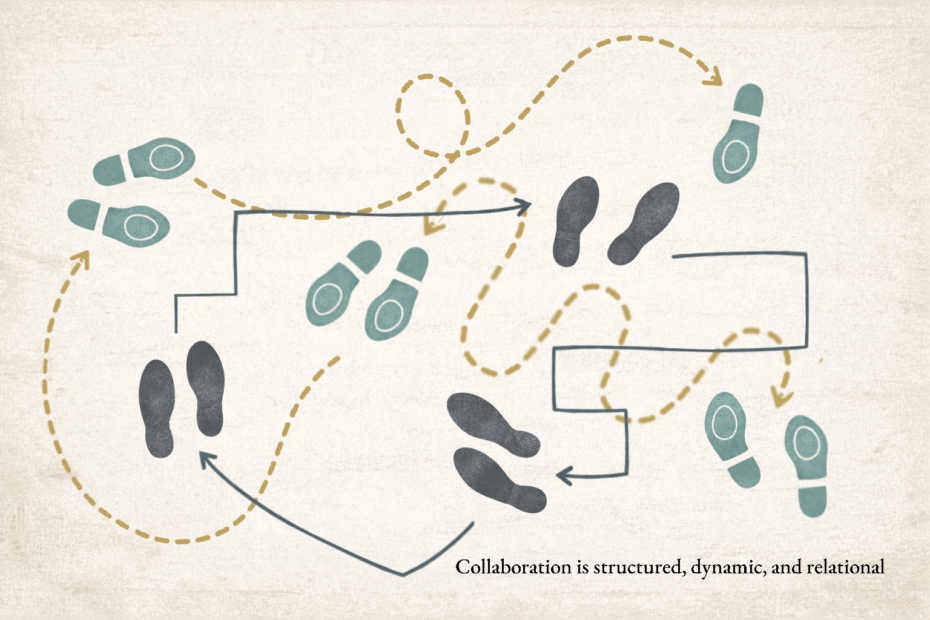
Over time, I’ve seen this help students move from “doing an exam on someone” toward genuinely partnering with a patient. Collaboration is not incidental to good medicine; it is the relational framework through which ethical, effective care becomes possible.
Student comfort and authentic questions
I’ve also noticed that students tend to ask questions more freely when they’re learning with instructor-models alone. Sometimes these are questions they don’t yet have professional language for, or feel awkward voicing in front of a medical preceptor.
For example, once a student asked whether they should prepare a patient with a vulva for the possibility of unexpected physical arousal during a pelvic exam. The question was phrased in everyday language rather than clinical terminology, because that was the language the student had available at the time. It reflects how rarely students are given language for discussing this possibility in vulvar exams.
In my experience, questions like this are less likely to surface in more hierarchical settings. Yet they are often the questions that most deeply shape ethical, respectful clinical practice.
One instructional source and model safety
Having a single instructional source can also make the physical exam feel safer and more coherent for everyone involved.
When a student and clinician become deeply engaged in parallel technical discussion, the embodied experience of the person being examined can fade into the background. This dynamic can be reinforced by how models are often trained in preceptor-led settings: they are encouraged to speak up about discomfort, but also to defer when a preceptor is speaking. The result can be confusion about when and how to intervene.
I’ve experienced situations in which a student, while trying to follow technical guidance from a preceptor, ended up maneuvering in a painful way that the preceptor was trying to prevent in the first place. In a single-instructor model, feedback is integrated and immediate. There is no ambiguity about whose guidance the student should prioritize, and the model does not have to weigh whether it is “appropriate” to interrupt.
What the research suggests
While the literature is relatively small, findings to date align with the practice-based observations shared above. Overall, studies suggest that students taught by lay instructor-models perform as well as, and sometimes better than, those taught by clinicians.
For example:
- A randomized study found that students taught by lay teaching associates performed equivalently overall and scored significantly higher in abdominal examination skills than students taught by physicians.
PubMed ID: 28351359
https://pubmed.ncbi.nlm.nih.gov/28351359/ - Another randomized trial found that students receiving instruction and feedback from teaching associates demonstrated significantly better short- and long-term performance in complex clinical skills compared with a control group.
PubMed ID: 17001147
https://pubmed.ncbi.nlm.nih.gov/17001147/
- A randomized study found that students taught by lay teaching associates performed equivalently overall and scored significantly higher in abdominal examination skills than students taught by physicians.
These studies are small and should be interpreted cautiously, but they align closely with what I’ve observed in practice.
Not an either/or, but a design choice
For me, this is not an argument against preceptors. Preceptors can be invaluable partners when collaboration is thoughtful and values-aligned. At the same time, the instructor-model structure offers unique advantages for cultivating patient-centeredness, student openness, and integrated learning in sensitive exam education.
Ultimately, my goal is simple: for students to receive the most humane, rigorous, and ethically grounded education possible, and to create an educational environment in which professional patients actively foster the development of collaborative clinician–patient relationships.
If you’d like to see how this approach looks in practice, I’m always happy to share videos, give demonstrations, or discuss ways the model can be adapted to fit different institutional needs.